Is there a nature of time?
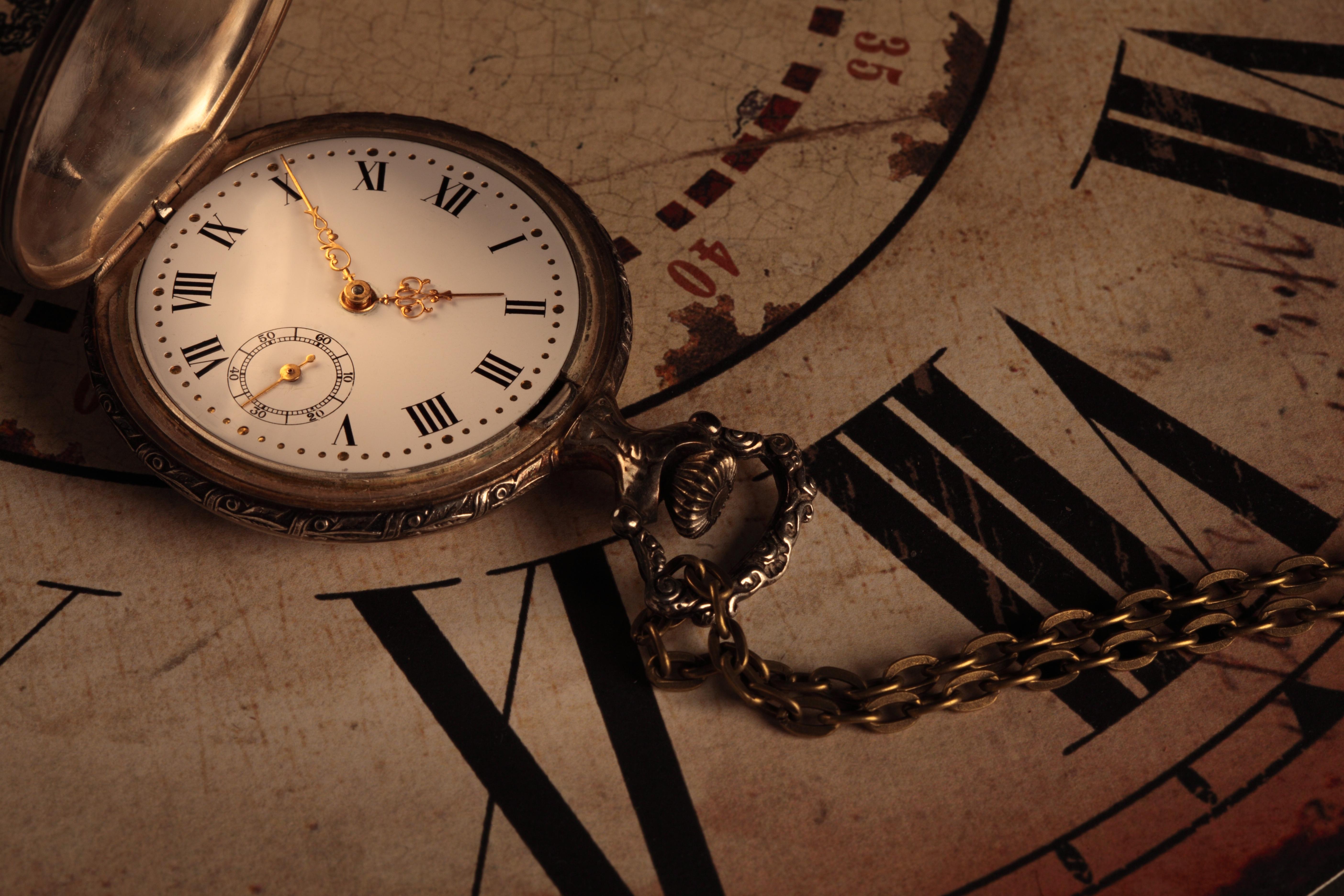
I tend to find myself thinking about time once in a while. Although I just can’t wrap my head around the true nature of it, there’s simply no denying that time in particular has one of the most profound and felt effects of them all. As time goes by we realize that there seems to be only one direction. In our retrospective view of events time moves from past to present to future, and never the other way around.
But wait, a new paper by physicists now suggest that gravity isn’t strong enough to force every object in the Universe into a forward-moving direction. However, this gives rise to the question of how we can be sure that time exists to begin with? After all, if we follow this new scientific lead, time may only exist inside our heads. That could literally be mind-blowing for mere humans, so let’s step back for a moment to revisit what we think to know about the so-called arrow of time.
British astronomer Arthur Eddington conclusively explained a hundred years ago that thanks to the forward-facing arrow of time, young becomes old and the past becomes the present, which once was the future. That’s why you can’t put your toothpaste back into the tube or unscramble your eggs. Once it’s done, it’s in the past. But if we try to shift our focus to another perspective, onto a meta level, and look at the Universe as a whole, there are only the zeros and ones of physics governing any kind of behavior. Almost all of these laws, apart from some tiny exceptions, are considered to be completely time-reversible and the same effects will occur, regardless of whether time is running forwards or backwards.
A Disorder of Time

There’s something made clear to us in the second law of thermodynamics. As time moves forward, the entropy highlighting the amount of disorder in the Universe will increase as well. The ingredients you mixed to cook your last meal can’t just be separated again. They are now something different, they are disordered and you can’t go back and lessen the amount of disorder.
An increasing disorder demands time moving in a certain direction and that’s the way it is... To settle for this argument causes a slight feeling of discomfort and inconvenience. That’s actually one of the reasons why many physicists now suspect that when good old gravity forces enough tiny particles to interact with each other, the forward-facing time arrow emerges, increasing entropy along the way. This would allow for a more directionless Universe once these tiny particles start interacting with much larger things. Tests need to be made and fortunate enough, a pair of physicists decided to put the theory to test.
The magic word *decoherence*
That moment when particle physics merge with classical mechanics is called decoherence. The most prominent theory explaining decoherence is the Wheeler-DeWitt equation from 1965. This field equation is part of a theory attempting to mathematically combine the ideas of quantum mechanics and general relativity, taking another step toward a theory of quantum gravity.

But back to the pair of physicists - Dmitry Podolsky, from Harvard University, and Robert Lanza, head of Astellas Global Regenerative Medicine, finally ran their measurements of gravity through the Wheeler-DeWitt equation. What they calculated unexpectedly found that the math didn’t fit and hence, the equation does not explain how time’s forward-moving direction actually emerges. According to their results, gravity’s effects kick in too slowly and can’t account for a universal arrow of time.
Here we are now. After having problems accepting the fundamental laws that led us to the 'ongoing mess' time has created in our Universe, this paper now suggests that time’s arrow is purely subjective and determined by an observer with a certain type of neurological wiring. The idea is controversial, and it didn’t take long before critics challenged the results for failing to include the fabric of space-time altogether.
In the end, the arrow of time might be pushing us forward, but so does the imagination of the people in our attempt to understand what things cause... even if that means that time’s just a construct of our conscious minds.
Adventures Beyond the Tick of a Clock
Travel is akin to reading the book of the world, a narrative where time plays a secretive, yet pivotal role. Each journey we embark on stands as a unique story, a chapter in which time morphs fluidly between past, present, and future. Just as physicists ponder the true essence of time's arrow, travelers seek to uncover the mysteries nestled within the folds of the Earth's landscapes and cultures. Whether time is a tangible thread that guides our exploration, or a figment of our collective consciousness, the passion to traverse the unknown remains timeless. With each stamp on our passport or memory etched in our minds, we capture moments that defy the confines of the clock, weaving together experiences that transcend the mere ticking of seconds. In the end, perhaps the essence of travel is the ultimate reflection of our quest to read the unfathomable book of time.
Guanajuato
Killarney
Dublin
New York
Melbourne
- Ibis Melbourne - Hotel & Apartments Therry Street Melbourne Vic
- Cheap Accommodation Melbourne Cbd Under $100